
Team role: Level Design, General Design & Audio Work.
Team size: 15
6 Artists, 4 Designers, 4 Programmers, 1 Audio Designer.
Duration: 9 weeks
Engine: Unity 6 HDRP
Platform: PC
Frightline was the 3rd game project at Playgroundsquad.It is a narratively driven atmospheric horror puzzle adventure game, in which a tiny wooden doll needs to escape a deadly ghost train by pushing through the terror within.
Trailer Coming Soon
Team Role
Level Design - General Design - Audio Work
- For Frightline I was a level designer first and foremost, making levels towards the end of the game and being heavily involved with the overarching level progression.- I was a puzzle designer pitching new puzzle mechanics and integrating them into levels.- I created a lot of sound effects for the game through FL Studio and integrated them with FMOD.- Did the collision for most of the larger modular pieces in the game, and for smaller interactable objects.- Helped with Story ideas and narrative design, mainly within the character concepts and logistics of the world.- Handled a lot of communication between disciplines and hosted meetings, mainly to get people engaged in the concept and include everyone in the creative process of decision making.
Challenges
A big challenge for this game was managing people's wants and desires. Everybody has their own idea of what the game should be, and all of those views are valid. As a designer the focus frequently shifted to breaking down people's ideas and ambitions and figuring out if they fit with the overarching experience. And if they don't, how can we reformat them so that they do?
Another big challenge was figuring out mechanics that we could utilize at multiple points in the game and build puzzles around. We did not want to have that many one-off mechanics. If a puzzle does introduce a one-off mechanic then they need to be paired with a previous mechanic so that there is clear direction for the player and they can build learning of the game's internal logic.Especially since my levels were spaced towards the end of the game I wanted them to test the players problem solving skills and feature multiple mechanics from the game. The last puzzle in the game features 3 old mechanics and 1 new one that is paired with the older ones, all in a smaller scope so the player can take in all pieces of information at once.It was also highly important that mechanics were introduced in a neutral more slow paced setting before they could be applied in a more high intensity scene. It was important for me that the player builds an understanding of the game before I challenge them.
Example of introducing a mechanic in a calm environment before intensity increases
Introducing the diner carts ability of transporting the player
Next level the player can use the cart to hide from the conductor
Another challenge was working on levels that varied greatly in gameplay.I made the largest level in the game, it is also the most hands off. It takes the form of a dining area where the player has to traverse tables and scuttle on the floor to hide from the ever present conductor.
It tests the players ability to sneak around and avoid danger, while also being a collectathon.

Side view of the dining car
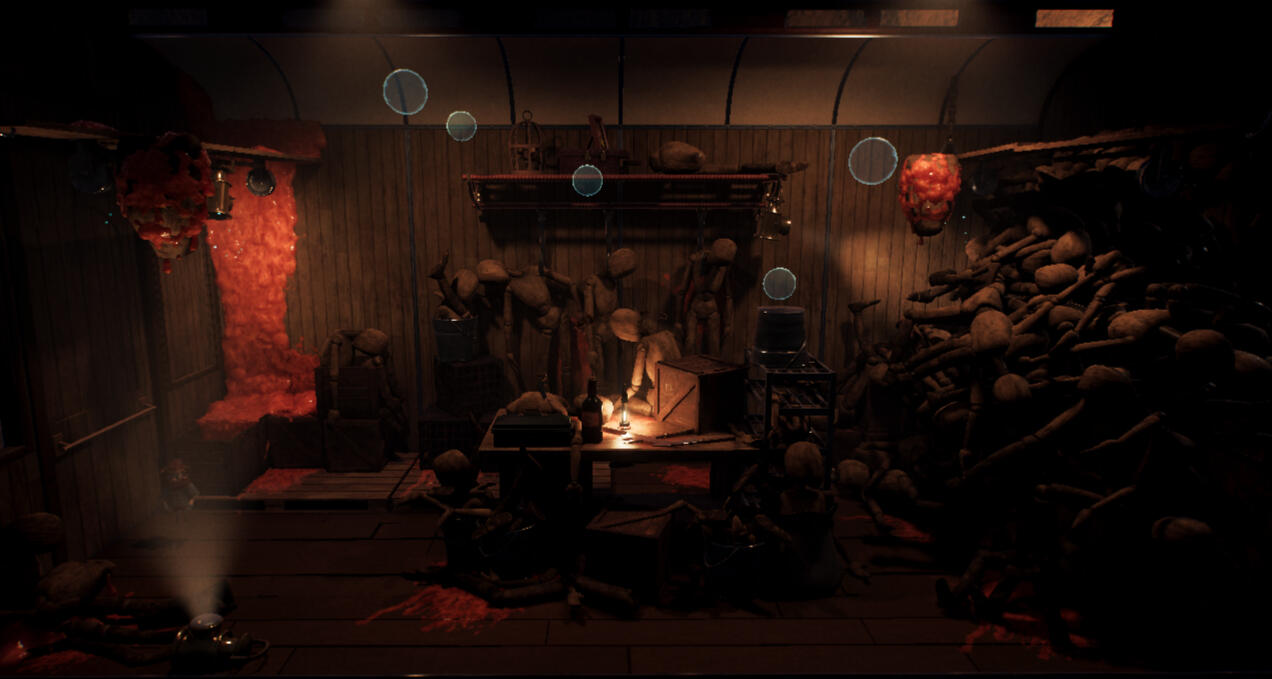
Side view of the workshop
In contrast to this I also made the smallest level, a tiny workshop that features a lot of mechanics. It was supposed to be an off-putting environment that kept the intensity from the previous level. To do this it had to be short enough that the player didn’t get bored, but long enough that the player felt real pressure to get out.
The main challenge stemmed from these levels being so different from each other yet they appeared right after one another meaning they had to link together in intensity, test the players abilities and set up for the finale of the game.
Level Design Breakdown
This will be a breakdown of the Workshop level. This level is the last level in the game before the finale. So it needed to maintain the fear factor of the previous level but still give the players a few breaths before the final sprint.
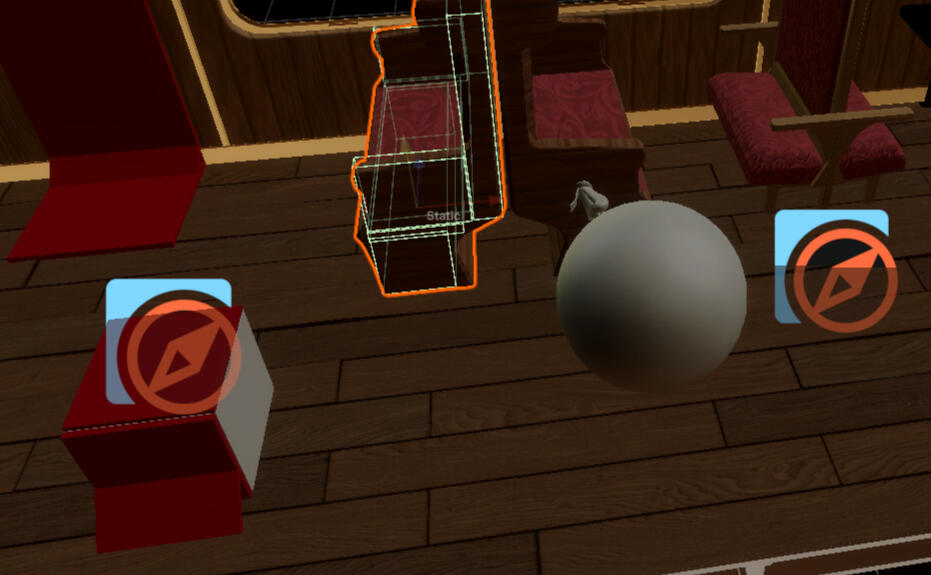
Screenshot of me testing the collision of the character while moving them with a sphere. As you can see the character is clipping into the chair, so things were not working perfectly but we had the ability to stick to a surface that you were moving. A promising start...
The whole idea for the workshop came about when we got sticky surfaces in the game.Sticky surfaces was the main puzzle mechanic for non spiritual traversal in the game, since it allowed us to stick onto any object and walk on itWhen testing this new mechanic out I had an idea:
"What if you could posses an item while being stuck on it? That means you could move your physical body without walking with it."This got me really exited about a level where you needed to traverse in the roof and had to basically control your own moving platforms.I pitched this idea to the programmers and within one day the feature was implemented into the game.
The Initial idea was to have a suspended spherical object high above ground. The player would stand on the object and posses it to move from left to right.Since the object was spherical the player would be able to walk all around it like the planets in Super Mario Galaxy.While rotating around it they would need to dodge obstacles in the way.I did not know what this room was going to be yet though, I only knew it was the final level before the ending chase scene, it needed to feel intense, be short and the conductor could not be a part of it.To not overload the amount of new assets that needed to be made I came up with the idea of a mannequin workshop.Since in the story the mannequins were the source of the sap that you walk on, leaking it like blood from flesh. It therefore made sense that a room dedicated to taking them apart would contain a lot of sap. It would also make sense that a room like that would have a rope pulley system suspending a spherical object: (mannequin torso) in the air.
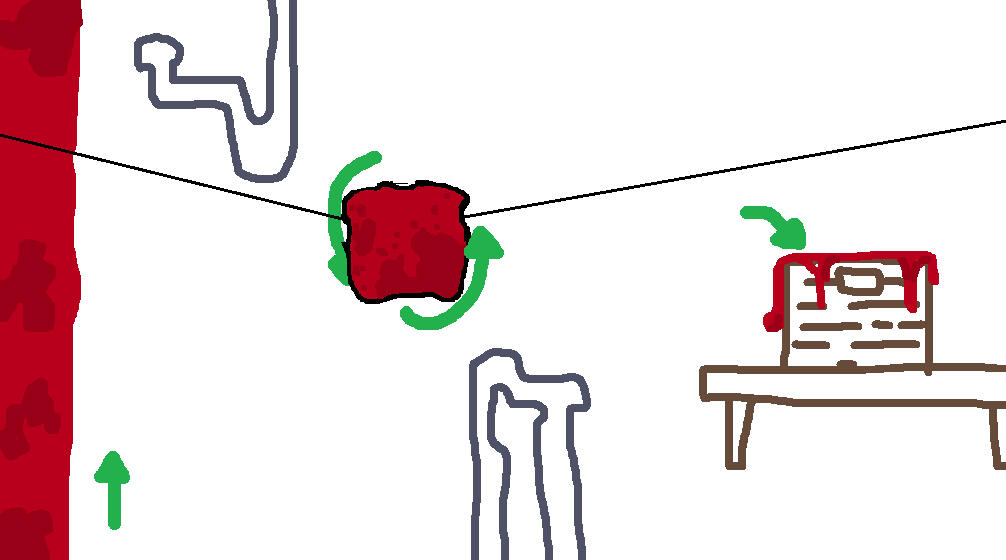
A "beautiful" sketch I made in MS Paint, it was initially just a section where the player needed to traverse from one point to another while avoiding pipes in the air.
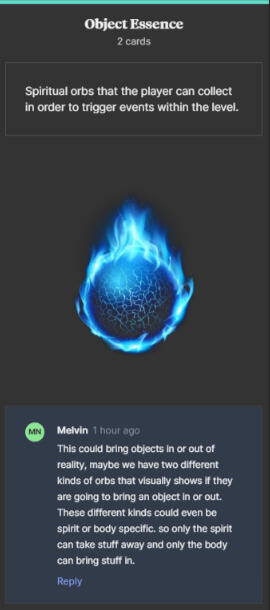
The initial idea for object essence, the idea for this mostly unchanged except there is no visual distinction between taking objects in or out of existence. To circumvent this issue we never mixed the two types in the same level to avoid confuson.
After testing I noticed that having physical obstacles that block the players path was way more complicated than initially expected.The collision behaved very differently while on a sticky object than normally. Fixing this issue would require a rewrite of the entire systemSo to save on time I needed to change dodging obstacles into something else.Luckily for me the object essence mechanic had just gotten introduced into the game.We had pitched together a sort of collectible item that when gathered would cause objects to appear or disappear, unlocking a way froward.So I decided that players would need to use the rope system to collect orbs midair.But this introduced another problem: When the player moves the platform to one side and jumps down, that platform will remain on that side. This would render that platform inaccessible for future use.I had multiple ideas on how we could solve this problem logistically. But the idea we ended up going with was that there were two platforms on either side of the room, when you moved one the other would simultaneously move in the other direction.This gave the illusion that they were both connected by the same rope system, and that the workshop had some complexity to it.
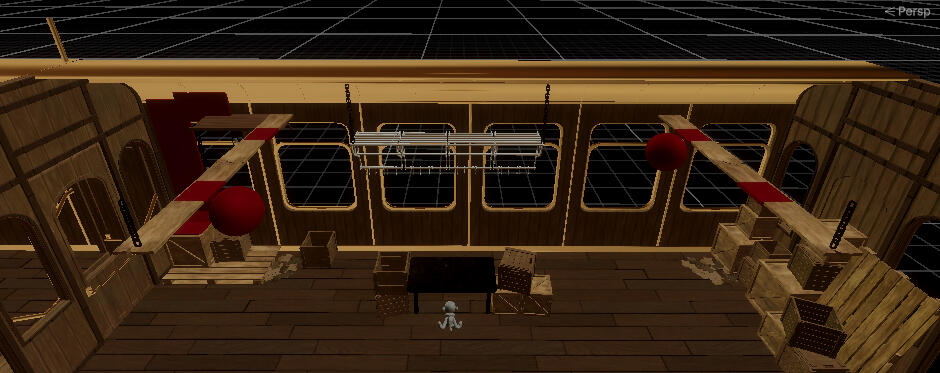
The first draft of the level, by this point in the game we had a lot of assets made so I did not have to resort to grayboxing.The level featured a walkable wall to the left from which you would reach the top rafters. From there you would control one of the platforms and move it to the right side collecting orbs on the way.
That would simultaneously move the other platform and give you access to the final orb.The main thing that changed with this version of the room was the size. It ended up being a third smaller than this to really sell the claustrophobic nature of this space and make it more uncomfortable.
After reducing the size of the level I realized how little space I actually had to work with, including tree different puzzle mechanics along with a brand new one in this level was going to be a challenge.I then shifted focus into populating the level with props and gray boxes to see how reduced the walkable area in this room could get before it started to become annoying.We wanted this level to be very visually striking and messy so it needed a lot of props and they could not interfere with gameplay.
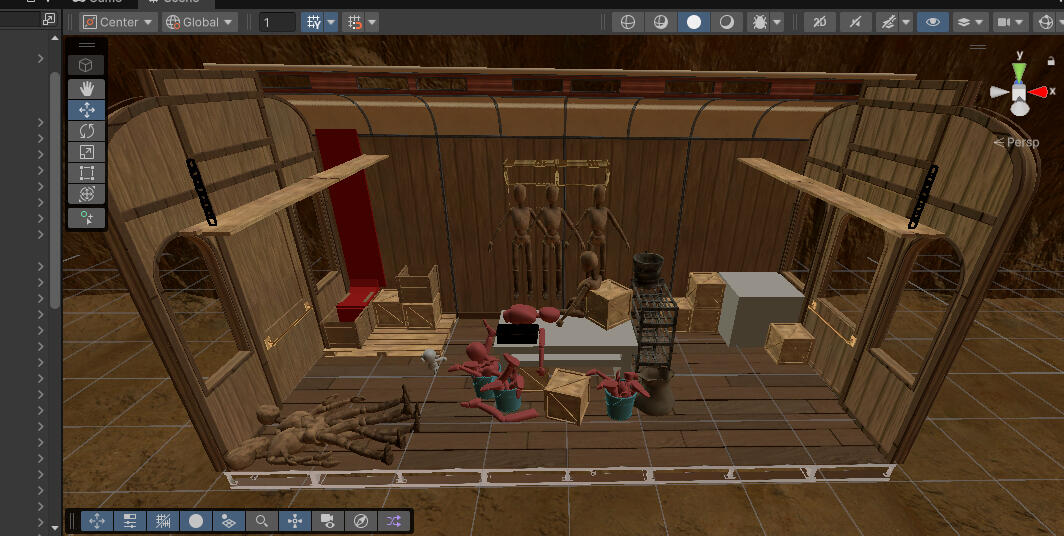
Reduced level that still keeps all of the core functionality of the original.
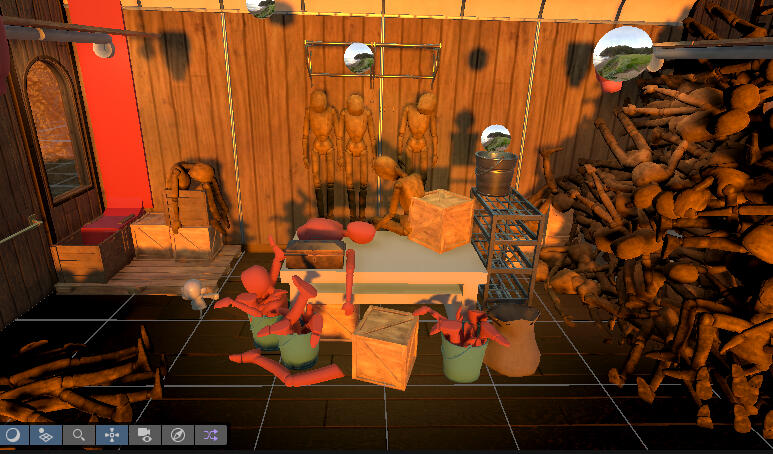
Screenshot of the finalized layout for the room, this was right after the orb on the bucket in the middle had been added. This version also had the wall of mannequins blocking the path forward, which was absent in the previous versions.
The level eventually got to a playable enough state where it could be play tested.During testing I found that a lot of players spent more time in the room than I had initially intended. I noticed that they spent that time trying to figure out what their goal was.This was because the camera did not focus on the ceiling so they would not see the orbs suspended there. And the way to reach the ceiling was not obvious enough.To circumvent this I placed one of the orbs high up on the table in the middle since most players were drawn to the table.Once that orb was collected it was apparent that the player need to collect more and the player would be high up enough that they could see the other orbs.The goal then shifted from aimless wandering into finding the way up.With a clear goal in mind players reached the top faster than they did before and the level reached its intended playtime.
In the end this level completed its goal of being a simple yet engaging puzzle that forced the player to think about their surroundings and explore, with a minimal learning curve.While the player did not doge obstacles in midair they still needed to utilize the sticky surface movement to collect orbs.The goal is clear to the players from the start and it works on pre-established logic that the player has picked up on throughout the game, making the puzzle intuitive.What makes it engaging is the context of the previous hurdles the player has had to overcome, the unsettling nature of the room and mechanical know-how to operate the pulley system.
Final version of the pulley system.
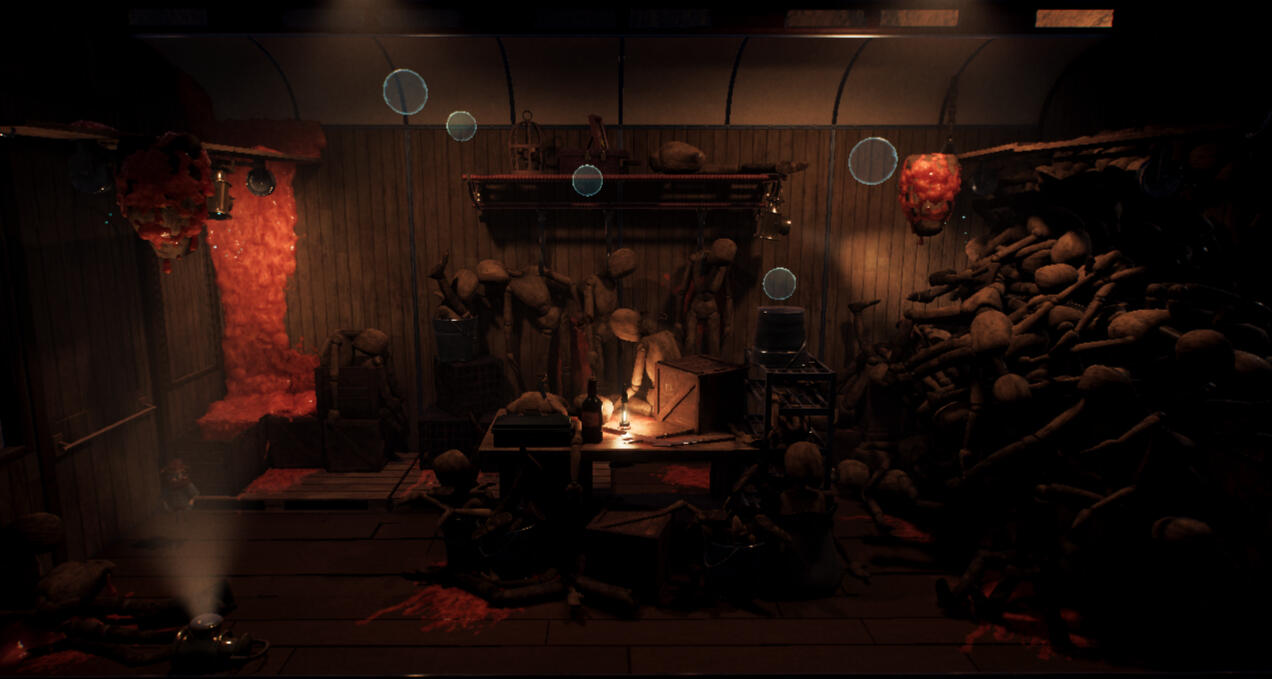
Entire finished puzzle
Takeaways
One of my biggest takeaways for this project was tailoring larger levels to be more fair on the players and having more margins for error while still keeping the difficulty and making the player think through problems.
My levels usually had multiple mechanics that the player needed to utilize in order to solve the problem. A big takeaway from this is to keep a steady flow of information and give the player clear hints and feedback that what they are doing is right or wrong.
Another big takeaway is not letting go of ideas that you know could benefit the project if they are turned down. If something is rejected because it is too time intensive to implement or does not fit the game, it is better to keep hold of the ideas and workshop them to fit the game instead of just tossing them.
An example of this is one of my initial ideas for a puzzle involving a balancing board that the player needed to launch themselves from.Example bellow:
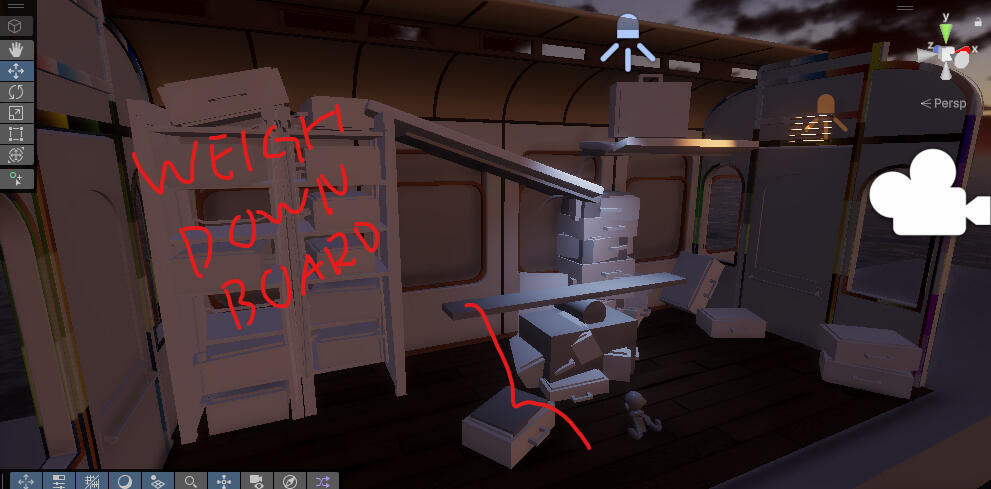
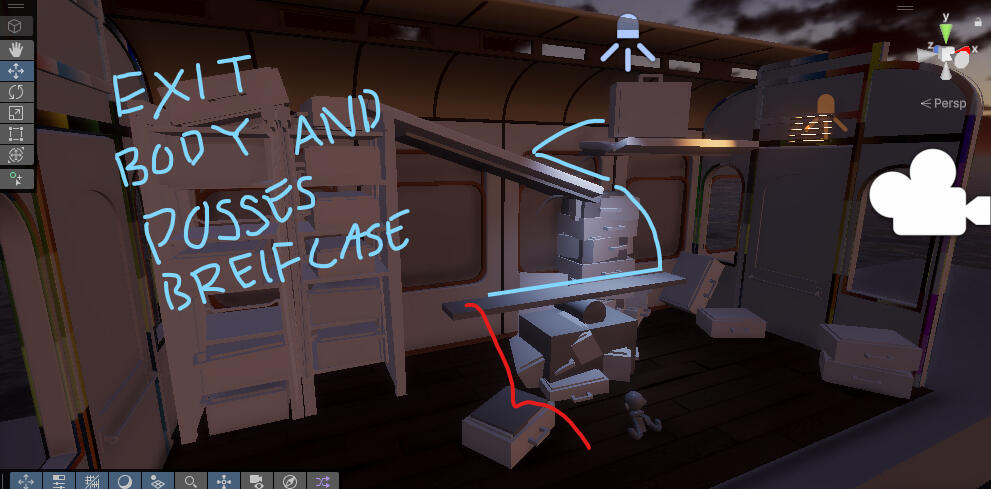
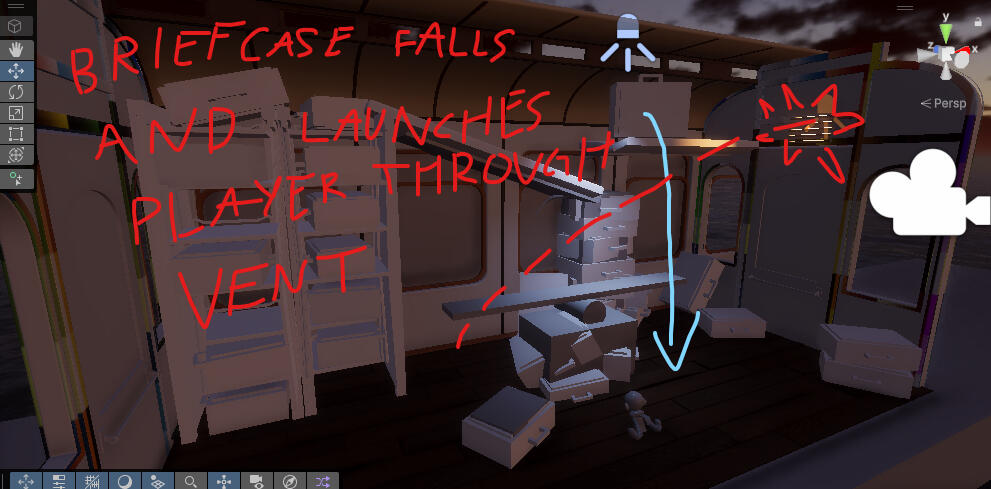
Early block out of a scrapped level, showcasing the see-saw mechanics purpose in the level.
The physics implementation of this function was too intensive however and the concept ended up getting scrapped. While the room and puzzle idea was removed the idea of a see-saw esque mechanic intrigued me. So I repitched it as a set weight stat that the player and other objects could have. This could be used in a section where the player needs to balance a scale to traverse the environment. This idea was easier to implement and worked better within the logic of the game. We implemented this mechanic in the kitchen level and it is widely regarded to be the best level in the game.